Geosynthetics Part 1: Geotextiles
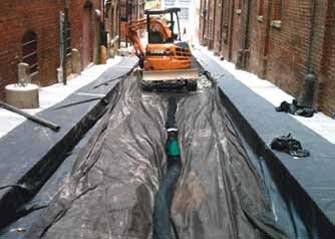
Geosynthetics can be grouped into several product categories; geotextiles, geogrids, geomembranes, geonets, geosynthetic clay liners, geopipes, geofoam, geocells and geocomposites. This article examines construction with geotextiles and future articles will cover construction using the other geosynthetics. The articles are excerpted from a soon-to-be released ICPI Tech Spec that provides a comprehensive view of geosynthetic materials, selection, and construction in various segmental concrete pavement assemblies.
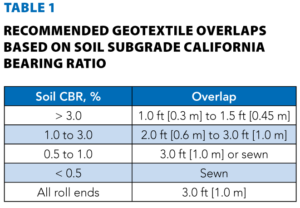
When placing geotextile avoid wrinkles in the fabric. Follow the overlap recommendations specified in AASHTO M-288 Geotextiles for Highway Applications as noted in Table 1. Make sure the geotextile is placed in full contact with the surrounding soils or aggregates. Voids, hollows or cavities from wrinkles created under or beside the geotextile compromises its intended function.
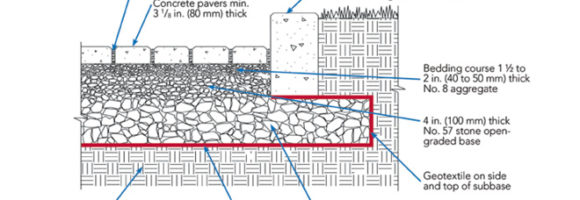
Figure 1 illustrates a familiar detail, i.e., separating the compacted aggregate base from the soil subgrade with geotextile. This can help maintain consolidation of the base materials over time by preventing intrusion of fines in the bottom and sides. This slows the rate of rutting in the base and on the soil subgrade.
Geotextile placed under the bedding sand next to the curb provides a ‘flashing’ function. This separates the sand from the base and prevents sand loss into joints between the concrete curb and the compacted aggregate base, as they are two structures that can move independently from each other. Table 2 provides guidelines for geotextile selection depending on the soil and fabric functions required.
Figure 2 illustrates geotextile on a concrete base in a crosswalk application. For new sidewalks, crosswalks and streets, 12 in. (300 mm) wide strips of geotextile are recommended over all joints in new concrete bases to prevent loss of bedding sand, as well as over weep holes. New asphalt generally should not require geotextile on it except at curbs, structures and pavement junctions where bedding sand might enter. For existing asphalt and concrete bases, the surface of each should be inspected for cracks, the severity and extent of which determines repairs. If cracks are few and minor (suggesting substantial remaining life in these bases), geotextile should be placed over the cracks to prevent potential future loss of bedding sand. Covering the entire asphalt or concrete surface with a loose-laid sheet of geotextile can present some risk of creating a slip plane for the bedding sand and paving units as a result of repeated vehicular traffic.
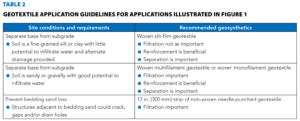
Figure 3 illustrates a typical application of geotextile in PICP. Its application against the sides of the subbase and against the excavated soil is essential in all PICP projects that do not use full-depth concrete curbs to completely confine open-graded aggregates at the pavement perimeter. The design and selection of geotextiles for PICP is covered in detail in the ICPI manual, Permeable Interlocking Concrete Pavements – Design, Specification, Construction, and Maintenance.


 Custom paver designs are another specialty option to consider. Wickenburg Landscape recently installed a Cadillac logo measuring 10 ft (3 m) in diameter using pavers in a residential driveway. Wolfe says the company has also installed horseshoes, flowers, inlaid circles and mosaic patterns.

 New this year at HNA, top hardscape contractors from three countries will compete for the Hardscape North America Installer Championship. Competitors from Canada, the United States and Mexico will test their understanding of industry best practices, safety, quality and craftsmanship in a race against the clock and other top installers. This championship will determine the best of the best in the hardscape industry!
 HNA’s Distributor & Dealer Program, “What’s The Big Idea?” is set for Wednesday, Oct. 23, 9:30 a.m.–3 p.m., at the Kentucky Exposition Center. This optional full-day program is dedicated to distributors and dealers who sell hardscape and landscape products to contractors and consumers. The program will cover topics such as marketing, social media, sales strategies, retaining quality employees and more. Following the program, distributors and dealers are invited to an exclusive preview of the trade show and welcome reception. Also new this year, the Distributor & Dealer Program will start Tuesday evening with an optional networking reception where dealers and distributors will have the opportunity to come together for an evening of fun, networking and entertainment.
 HNA will announce the winners of the 6th Annual HNA Hardscape Project Awards at a breakfast banquet at the Hyatt Regency Louisville on Friday, Oct. 25th. The awards recognize the contractor’s quality construction and craftsmanship in outstanding commercial and residential hardscape projects in North America. Winners will be featured in Interlock Design magazine, other trade publications and on the HNA website.